Learn how to file a Small Claims case in California — who can sue, filing limits, court steps, and tips for success without hiring a lawyer.
Filing a small claims case in California can be confusing if you don’t know the court rules, filing limits, or deadlines. This guide walks you through the exact steps to file correctly .For a broader overview of California legal rights, see our complete California legal guide here.
Table of Contents
What Is a Small Claims Case?
A Small Claims case is a simplified legal process in California designed to help individuals and small businesses resolve disputes quickly and affordably. Unlike other court cases, you don’t need a lawyer — in fact, attorneys aren’t allowed to represent you during the hearing. The Small Claims system is meant to handle minor disputes such as unpaid debts, property damage, or breach of contract.
As of 2025, the maximum amount you can sue for in California’s Small Claims Court is:
- $12,500 for individuals or sole proprietors
- $6,250 for corporations or other entities
If your claim is higher than these limits, you’ll need to waive the extra amount or file in a higher court such as Superior Court.
Common Reasons People File Small Claims
In California, thousands of residents turn to Small Claims Court every year for cases like:
- Unpaid rent or security deposit disputes
- Property damage from a car accident
- Contractor or repair service problems
- Failure to repay personal loans
- Damaged or missing personal property
The process is designed for ordinary people, making it one of the most accessible ways to seek justice for small losses.

Step 1: Make Sure Small Claims Is the Right Option
Before filing, confirm that your situation qualifies as a Small Claims matter. You must be at least 18 years old, or a legal guardian must file on your behalf. You also need to make sure:
- The defendant (person you’re suing) lives, does business, or the dispute occurred in California.
- The total amount of your claim falls under the monetary limits.
- You’ve first tried to resolve the issue informally — California law requires that you attempt to contact the other party and request payment before suing.
You can find more guidance on eligibility and pre-filing steps at the California Courts Self-Help Center: https://selfhelp.courts.ca.gov/small-claims
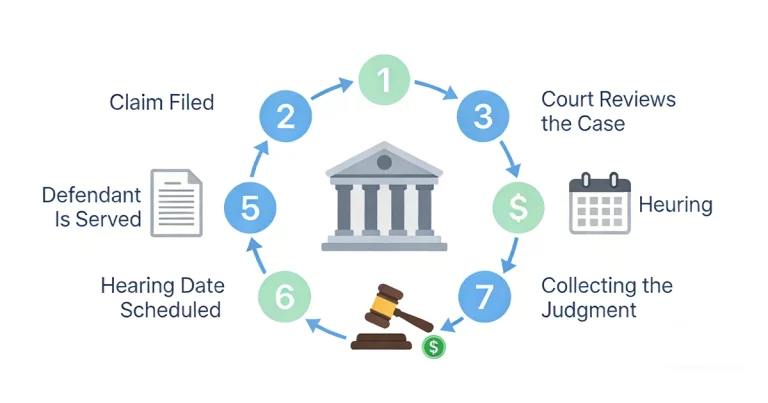
Step 2: File Your Claim
Once you’re ready, fill out Form SC-100 (Plaintiff’s Claim and Order to Go to Small Claims Court). This form asks for:
- Your full name and address
- The defendant’s full legal name and address
- The reason for your claim
- The total amount of money you’re asking for
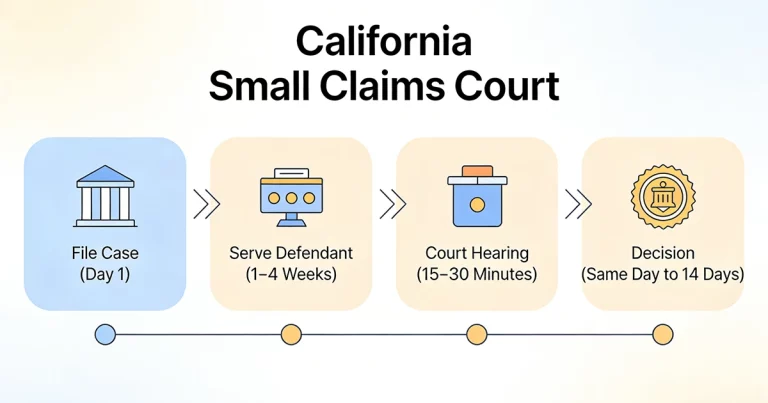
You can file in person, by mail, or sometimes online, depending on your county. Most Small Claims filing fees range from $30 to $100, based on the amount you’re suing for.
If you’re unsure where to file, use the “Find My Court” tool on the California Courts website to locate the correct courthouse.
Step 3: Serve the Defendant
After filing, you must serve (officially deliver) a copy of your claim to the defendant. This step ensures they know about the Small Claims case and have a chance to respond.
You cannot serve the papers yourself — instead, use one of these methods:
- Sheriff’s Department service (for a small fee)
- Registered process server
- A neutral adult (18+) who’s not involved in the case
Service must be completed within the deadline (usually at least 15–20 days before the hearing) and proof of service must be filed with the court.
Step 4: Prepare for Your Hearing
Preparation is key to success in Small Claims Court. Bring every document that supports your side, such as:
- Receipts, invoices, or contracts
- Photos or videos showing damages
- Written communications (texts, emails, letters)
- Witness statements
Organize everything clearly — judges appreciate concise and well-prepared presentations.
You can also attend another Small Claims hearing before your court date to observe how cases are handled.
Step 5: Attend the Hearing
On the day of your Small Claims hearing:
- Arrive early and check in with the clerk.
- Dress neatly and speak respectfully.
- Address the judge as “Your Honor.”
- Stick to the facts and avoid emotional arguments.
You’ll each get a few minutes to present your case. The judge may make a decision right away or mail you the judgment later.
If you win, you may be awarded the amount claimed, plus court costs.
If you lose, you have the right to appeal within 30 days (except if you’re the defendant in a countersuit — your options may differ).
Step 6: Collecting Your Judgment
Winning a Small Claims case doesn’t automatically mean you’ll get paid. If the other party refuses to pay, you may need to take enforcement steps such as:
- Wage garnishment (requesting part of their paycheck)
- Bank levy (seizing funds from their bank account)
- Lien on property (recording your judgment to collect later)
California’s court self-help centers and local small claims advisors can guide you through these processes. Every county offers free or low-cost Small Claims Advisor services.
Tips for Success in California Small Claims Court
- Be concise: Judges prefer clear and direct arguments.
- Be respectful: Courthouse demeanor matters more than people think.
- Know your facts: Dates, amounts, and evidence should all line up.
- Be realistic: Don’t inflate your claim; stick to verifiable damages.
- Stay organized: Keep a notebook with all case-related notes and documents.
These simple steps can make the difference between winning and losing your case.
👉What Happens After You File a Small Claims Case in California
Where to Get Help
California offers several trusted resources for Small Claims litigants:
- California Courts Self-Help Center: https://selfhelp.courts.ca.gov/small-claims
- County Small Claims Advisor Program: Free legal guidance by phone or email.
- California Department of Consumer Affairs: Advice on consumer-related claims.
These agencies don’t take sides — they’re designed to help you understand the process and file correctly.
FAQ
1️⃣ How much does it cost to file a small claims case in California?
Ah, the cost question—completely understandable. Filing fees for small claims court in California are generally between $30 and $75, depending on the amount you’re claiming. For example:
- Claims up to $1,500: usually around $30–$35
- Claims $1,501–$5,000: around $50
- Claims above $5,000: $75
Tip from me: If you’re worried about cost, some courts offer fee waivers if your income is low. It’s worth asking! And don’t forget—you might also have small fees for serving the papers to the other party.
In short, small claims court is designed to be affordable—you shouldn’t have to break the bank to assert your rights.
2️⃣ What is the maximum amount for small claims court in California?
Here’s the quick reality: the maximum amount you can claim depends on who is filing.
- Individuals: up to $10,000
- Businesses: up to $5,000
Note: This limit is for most standard claims, like unpaid rent, security deposit disputes, or minor property damages. If your case involves larger amounts or complex legal issues, small claims court isn’t the right place.
Personally, I always tell clients: don’t try to stretch it. If your claim exceeds the limit, you’re better off seeking formal legal advice. Trying to file a claim over the limit can waste your time and cost extra fees.
3️⃣ Can I file a small claims case online in California?
Yes and no—it depends on your county. Some California courts now allow you to start your small claims filing online, submit forms electronically, and even pay fees online. But not every court has fully implemented this yet.
Here’s what I usually suggest:
- Check your local court’s website—look for “small claims e-filing” or “file small claims online.”
- Gather your documents first—you’ll need evidence like receipts, photos, and correspondence.
- Don’t forget service—even if you file online, the other party still needs to be formally notified.
My tip: Even if online filing is available, I often recommend at least a phone call or visit to the court to confirm you’ve done everything correctly. Small mistakes in filing can delay your case unnecessarily.
Conclusion
Filing a Small Claims case in California is a practical way to recover money or resolve disputes without hiring a lawyer. The process is straightforward, affordable, and empowering for ordinary people. Whether you’re a tenant, small business owner, or consumer, the Small Claims Court gives you a fair chance to be heard and obtain justice.
If you take time to prepare, stay organized, and follow the steps carefully, your Small Claims experience can be efficient — and even empowering — as you stand up for your rights.
Author Bio
Emily Carter, J.D., focuses on landlord–tenant disputes and small claims court procedures in California. She helps renters and property owners understand their legal options clearly and realistically.