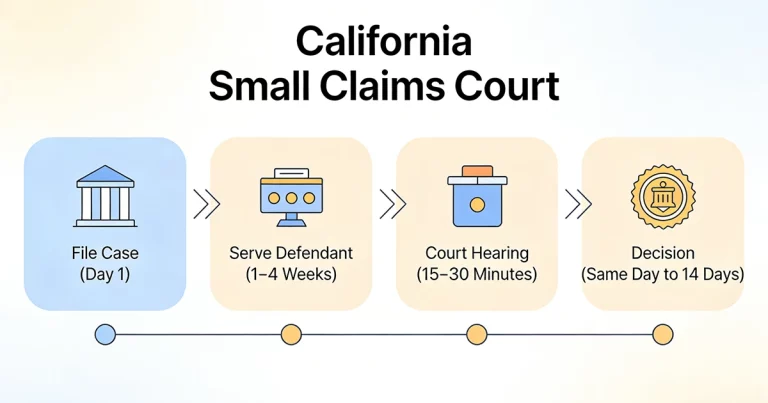
Winning a small claims case in California doesn’t guarantee payment. Learn what usually happens if the defendant doesn’t pay, what options may exist, and what to expect next.
Winning a small claims case in California does not automatically mean you will receive payment. Many people are surprised to learn that the court does not collect the money for you, even after a judgment is issued in your favor.
If the defendant does not pay after small claims court, you may need to take additional steps to enforce the judgment. This guide explains what typically happens next, what options are available, and what to expect if payment is delayed.
California Small Claims Court Guide for Tenants & Landlords (2026)
This guide explains what happens after you win a small claims case in California and the defendant does not pay.
Table of Contents
Step 1: Understand What the Judgment Means
After the hearing, the judge issues a judgment stating who won the case and how much money is owed. This judgment legally confirms that the defendant must pay you.
However, a judgment does not guarantee immediate payment. The court does not contact the defendant, garnish wages, or seize property on your behalf.
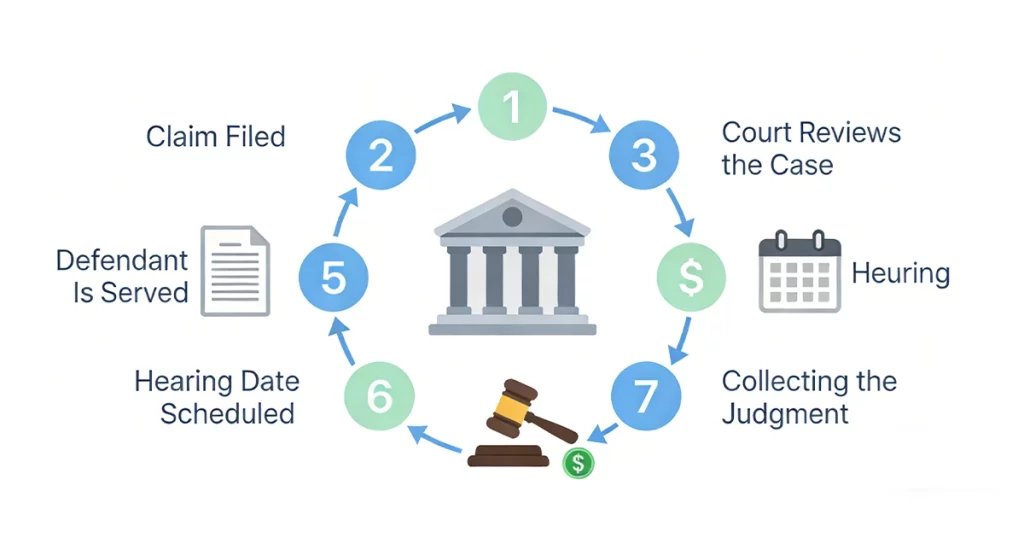
At this stage, the judgment establishes your legal right to collect, but enforcement is your responsibility.
👉How to File a Small Claims Case in California
Step 2: Give the Defendant Time to Pay Voluntarily
In many cases, defendants pay without further action. Some people wait to receive the written judgment, while others need time to arrange payment.
After judgment:
It is common to wait a short period before taking enforcement steps, especially if the defendant appears willing to pay.
👉California small claims court complete guide
Step 3: Request Information About the Defendant’s Assets
If payment does not arrive, one of the first steps you can take is requesting information about the defendant’s ability to pay.
California allows judgment creditors to ask for:
This information helps determine whether further collection efforts are likely to be successful.
Step 4: Enforcing the Judgment
If the defendant still does not pay, California law provides several methods to enforce a small claims judgment. Common enforcement options may include:
Each option has specific requirements, forms, and limitations. Not every method is available in every case, and enforcement steps may take additional time.
Because enforcement involves formal legal procedures, it is important to follow court instructions carefully.
Step 5: What If the Defendant Claims They Cannot Pay?
Sometimes, the defendant argues that they cannot afford to pay the judgment. Financial hardship does not automatically eliminate the obligation to pay, but it may affect how collection proceeds.
In some situations:
- The court may review the defendant’s financial information
- A payment schedule may be established
- Collection efforts may be delayed but not canceled
Even if payment is not immediate, a judgment may remain enforceable for years.
Step 6: How Long Do You Have to Collect?
A California small claims judgment does not expire quickly. In many cases, a judgment can remain enforceable for several years and may be renewed.
This means that even if the defendant does not pay right away, you may still have time to pursue collection later if their financial situation changes.
Common Questions About Unpaid Small Claims Judgments
Can I add interest or costs?
In some cases, interest or approved costs may apply after judgment.
Do I need a lawyer to collect?
Lawyers are generally not required for small claims enforcement, but procedures must be followed carefully.
Does the court collect the money after a small claims judgment in California?
No. In California, the court issues the judgment but does not collect the money for you. If the defendant does not pay voluntarily, additional steps may be required to enforce the judgment.
How long does the defendant have to pay after small claims court?
There is no automatic deadline for payment. Some defendants pay soon after receiving the judgment, while others may delay payment. If payment does not occur, enforcement options may be available.
What happens if the defendant ignores the small claims judgment?
If the defendant ignores the judgment, the debt does not disappear. The judgment may remain enforceable, and you may have options to pursue collection if payment is not made.
Can the defendant refuse to pay a small claims judgment?
A defendant may refuse or delay payment, but the judgment still represents a legal obligation to pay. Refusal does not cancel the judgment.
How long does a small claims judgment last in California?
A small claims judgment in California does not expire immediately. In many cases, it can remain enforceable for several years and may be renewed under certain conditions.
Do I need a lawyer to collect a small claims judgment?
Lawyers are generally not required for small claims enforcement. However, collection procedures must follow court rules, and careful attention to instructions is important.
Final Thoughts
Winning a small claims case is an important step, but collection is often a separate process. Understanding what happens if the defendant does not pay helps you decide what actions to take and what to expect.
If you are still in the early stages of your case, this guide on how to file a small claims case in California explains the full process from filing through judgment.
👉Read the Full Alabama Landlord-Tenant Law Guide
About the Author
Emily Carter is a U.S.-based legal content writer focusing on landlord-tenant law, eviction procedures, and residential housing regulations. Her work is informed by state statutes, court filings, and common landlord-tenant disputes, with an emphasis on clarity and practical understanding.