Learn how California small claims court works, including the filing process, claim limits, court fees, and what to expect at a hearing. Informational overview only.
California Small Claims Court is designed to help individuals resolve disputes quickly and affordably without hiring a lawyer. If you are considering filing a claim in California, this guide explains who can file, how much you can sue for, how the process works, and what to expect at your hearing.
This guide provides an overview of California Small Claims Court, including filing, limits, and what to expect.
Table of Contents
What Is Small Claims Court in California?
Small Claims Court in California is a special court where individuals and businesses can sue for money damages up to a legal limit. The process is simplified so people can represent themselves, present evidence directly to a judge, and receive a decision without lengthy litigation.

Small claims cases commonly involve unpaid debts, property damage, security deposit disputes, and landlord-tenant issues.
Who Can File a Small Claims Case in California?
You may file a small claims case in California if you are:
Attorneys are generally not allowed to represent parties during the hearing, which keeps the process accessible and cost-effective.
California Small Claims Court Limits
How Much Can You Sue For?
The maximum amount you can sue for depends on who you are:
- Individuals: up to $10,000
- Businesses: up to $5,000
Individuals may file more than one small claims case per year, but only two claims can exceed $2,500 within a calendar year.
What Types of Cases Can Be Filed?
Small claims court in California typically handles disputes involving:
For example, disputes involving illegal lockouts or utility shutoffs often overlap with small claims matters when monetary damages are involved.
👉 Illegal eviction and tenant-rights-related claims can be explored further in your state-specific guides.
How to File a Small Claims Case in California (Step-by-Step)
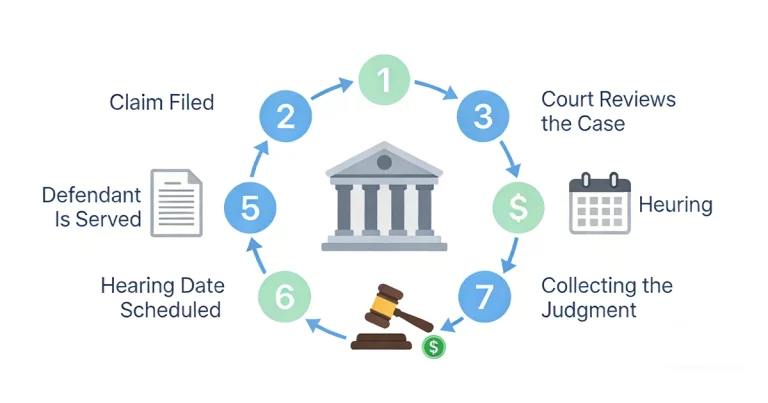
Filing a small claims case in California generally involves the following steps:
- Identify the correct court
File in the county where the defendant lives or where the dispute occurred. - Complete the required form
Most cases use Form SC-100 (Plaintiff’s Claim and ORDER to Go to Small Claims Court). - File the claim with the court clerk
You can file in person or online in many counties. - Pay the filing fee
Fees depend on the amount you are suing for (see below). - Serve the defendant
The defendant must be formally notified of the case before the hearing. - Prepare for the hearing
Bring documents, photos, contracts, receipts, and witnesses.
California Small Claims Court Filing Fees
Filing fees in California small claims court typically range from:
- $30 for claims up to $1,500
- $50 for claims between $1,500 and $5,000
- $75 for claims over $5,000
Additional fees may apply for serving court documents.
What Happens at the Small Claims Hearing?
At the hearing:
- Both sides present their case directly to a judge
- Evidence is reviewed informally
- Witnesses may testify
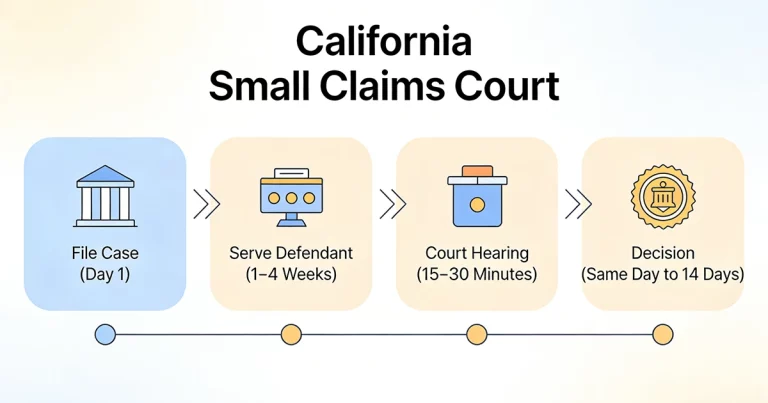
- The judge may issue a decision immediately or mail it later
Hearings are usually brief, often lasting less than 30 minutes.
Can You Appeal a Small Claims Court Decision in California?
In California:
- Defendants may appeal a small claims court decision
- Plaintiffs generally cannot appeal if they lose
Can landlord-tenant disputes be handled in small claims court?
Appeals are typically heard as a new trial in superior court.
California Small Claims Court FAQs
What is the small claims court limit in California?
Individuals can sue for up to $10,000, while businesses are limited to $5,000 per claim.
Do I need a lawyer for small claims court in California?
No. Lawyers are generally not allowed to represent parties at the hearing.
How long does a small claims case take in California?
Most cases are resolved within 1 to 3 months, depending on court scheduling and case complexity.
What happens if the defendant does not show up?
If the defendant fails to appear after proper service, the judge may issue a default judgment in favor of the plaintiff.
Yes. Many landlord-tenant disputes, including unpaid rent and security deposit issues, are commonly resolved through small claims court if the claim is within the monetary limit.
For broader landlord-tenant rights and responsibilities by state, see:
👉 state laws
Final Note
This guide provides general information about California Small Claims Court and does not constitute legal advice. Court procedures may vary by county, and you should consult official court resources or a qualified professional if you have specific legal questions.
Author Disclosure
Written by Emily Carter, J.D.
Housing law researcher and Small Claims Court specialist with over 8 years of experience in landlord–tenant disputes.
This content is for educational purposes only and does not provide legal advice.